


How health costs quietly trigger stress—and how to feel financially protected without constant worry
If a medical bill instantly makes your chest tighten, you’re not weak—and you’re not alone.
For many people, medical bills represent uncertainty, not just expense. They arrive unexpectedly, feel difficult to question, and often come wrapped in unfamiliar terms. This combination makes healthcare costs one of the most powerful sources of financial anxiety.
At LifeWellToday, we treat medical bills anxiety as a Financial Wellness issue, not a failure to plan. This article explains why medical costs feel so overwhelming—and how to prepare calmly without living in constant fear.
Why Medical Bills Trigger Unique Anxiety
Unlike most expenses, medical costs:
-
are unpredictable
-
feel non-optional
-
involve complex systems
-
intersect directly with health and safety
Your nervous system reads this as loss of control—a core trigger for anxiety.

The Psychology Behind Medical Cost Stress
1️⃣ Health and Money Collide
When health is involved, financial decisions stop feeling abstract. Medical bills activate primal fears:
-
“What if this happens again?”
-
“What if I can’t afford care?”
-
“What if I make the wrong choice?”
This blend of physical vulnerability and financial uncertainty amplifies stress.
2️⃣ Medical Billing Lacks Transparency
Most people don’t fully understand:
-
itemized charges
-
insurance adjustments
-
what is negotiable
Confusion increases perceived threat—even when costs are manageable.

3️⃣ Past Experiences Linger
A single overwhelming bill in the past can condition long-term anxiety. Even years later, the body remembers the stress.
This isn’t overreacting—it’s learned protection.

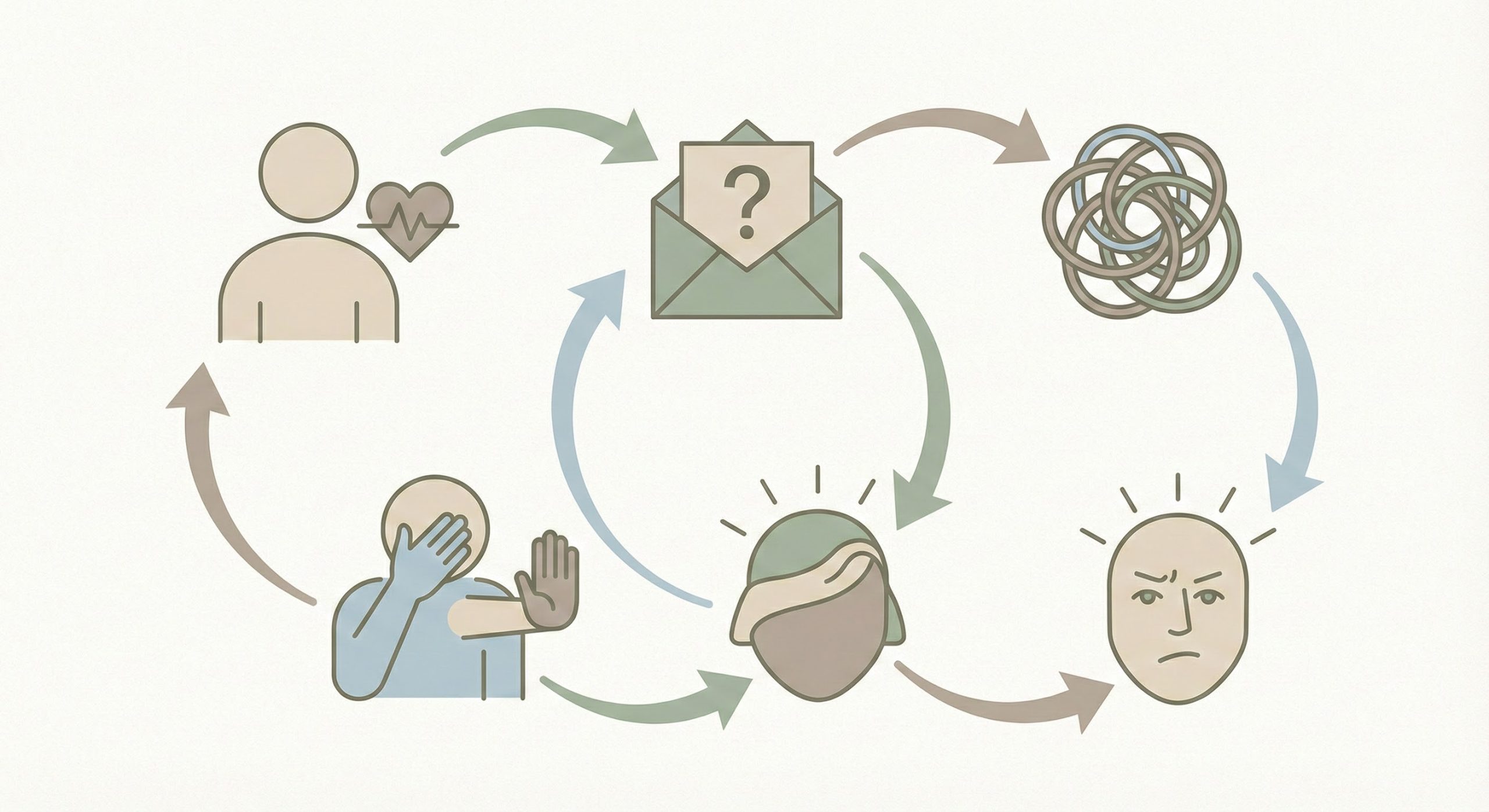
The Medical Bills Anxiety Loop
Medical cost stress often follows this cycle:
Health event → bill arrives → confusion/fear → avoidance → more anxiety
Avoidance doesn’t remove the cost—it magnifies uncertainty.
Why Avoidance Feels Safer (But Isn’t)
Avoiding medical bills:
-
delays emotional discomfort
-
protects against overwhelm
-
reduces immediate stress
But long-term, it leads to:
-
missed deadlines
-
loss of negotiation options
-
escalating anxiety
Financial wellness requires measured engagement, not avoidance.
Reframing Medical Bills: From Threat to Process
A healthier frame:
Medical bills are not emergencies by default.
They are processes, often adjustable over time.
This mindset alone lowers stress.
Calm Ways to Prepare Without Panic

1️⃣ Separate Health Fear From Financial Planning
Your body reacts to health risk—even when the bill is manageable.
Pause before problem-solving:
-
breathe
-
ground
-
then review numbers
Regulation first, action second.
2️⃣ Build a “Medical Buffer,” Not Perfection
Instead of trying to predict everything, create flexibility:
-
a modest emergency fund
-
awareness of insurance basics
-
knowledge of billing options
Safety comes from options—not certainty.
3️⃣ Understand What’s Often Possible
Many people don’t realize:
-
payment plans are common
-
bills can be negotiated
-
errors are frequent
Clarity reduces fear faster than income alone.
4️⃣ Review Insurance Calmly, Not Under Stress
Insurance decisions made during panic feel overwhelming.
A calmer approach:
-
review coverage during neutral moments
-
focus on worst-case protection, not optimization
-
accept “good enough”
Perfection is not required for safety.
How Insurance Reduces Anxiety (Psychologically)
Insurance doesn’t just cover costs—it:
-
reduces catastrophic uncertainty
-
protects decision-making capacity
-
lowers background stress
Viewed this way, insurance is a mental health tool, not just a financial product.
When Medical Bills Become a Mental Load
If medical cost anxiety:
-
disrupts sleep
-
causes avoidance
-
blocks care-seeking
It’s a sign the issue is emotional—not numerical.
Addressing anxiety improves outcomes more than memorizing details.
Gentle Reflection
-
What emotion comes up first when you think about medical bills?
-
Was there a past experience that shaped this reaction?
-
What would change if preparation replaced fear?

Frequently Asked Questions
Is medical bills anxiety common?
Yes—especially among financially responsible adults.
Does insurance eliminate anxiety completely?
No, but it significantly reduces uncertainty.
Is it okay not to understand everything immediately?
Yes. Clarity develops over time—not instantly.
Final Thought
Medical bills feel frightening because they combine health, money, and uncertainty.
But financial wellness doesn’t require constant vigilance.
It requires preparedness without panic.
When you stop treating medical costs as an immediate threat—and start treating them as a manageable process—calm becomes possible.
Continue the Financial Wellness Series
This article is for educational purposes only and does not constitute medical or financial advice.
Sources
Consumer Financial Protection Bureau. Medical billing and patient rights.
National Consumer Law Center (NCLC). Medical debt protections.
When to Seek Help
If medical bills are causing severe stress, avoidance, or financial instability, professional financial counseling or patient advocacy services may help clarify options.

Michael Tran
Financial Wellness Editor at LifeWellToday
About Michael Tran
Michael Tran is a Financial Wellness Editor at LifeWellToday, where he focuses on the intersection of money, mental well-being, and everyday life.
His work helps readers understand financial stress not as a personal failure, but as a natural response to modern pressures—rising living costs, healthcare expenses, workplace demands, and economic uncertainty. Michael writes with a calm, human-centered approach, translating complex financial and insurance topics into practical, emotionally grounded guidance.
Rather than promoting hustle culture or extreme financial optimization, Michael emphasizes clarity, emotional safety, and sustainable habits. His goal is to help readers feel more confident and less overwhelmed when making everyday financial decisions.
Areas of Focus
- Money anxiety and emotional stress around finances
- Insurance literacy (health, life, and workplace coverage)
- Financial boundaries at work and burnout-related money stress
- Emergency funds, medical bills, and financial avoidance
- Behavioral finance and habit-based money systems
All content is written to align with responsible YMYL standards, prioritizing education, balance, and reader well-being.
Editorial Approach & Standards
At LifeWellToday, Michael collaborates closely with the editorial team to ensure that all Financial Wellness content:
- Is educational and informational—not personalized financial advice
- Reflects evidence-based insights from reputable sources
- Avoids fear-based or urgency-driven messaging
- Aligns with Google’s E-E-A-T (Experience, Expertise, Authoritativeness, Trustworthiness) guidelines
When appropriate, articles include references to trusted public sources and guidance on when readers should seek professional financial, medical, or mental health support.
Experience & Background
Michael has experience in editorial research and long-form content development within the lifestyle and wellness space. His background includes analyzing behavioral patterns, simplifying complex topics, and building content systems designed for clarity and reader trust.
He believes financial wellness is not about perfection or wealth—but about creating a sense of safety, agency, and self-respect around money.
Disclaimer
Michael Tran is not a licensed financial advisor, medical professional, or legal expert. All content published on LifeWellToday is intended for educational and informational purposes only and should not be considered professional advice.
Readers facing serious financial, medical, or mental health concerns are encouraged to consult qualified professionals.
Contact & Editorial Inquiries
For editorial questions or content-related inquiries, please contact:
? michael@lifewelltoday.com
1 Comment
Pingback: Medical Debt Stress: What to Do Without Shame or Panic