


A calm explanation of why intelligence and success don’t protect us from money avoidance—and how to rebuild trust without guilt
If you’re capable, intelligent, and generally “put together,” yet still avoid checking your bank account or opening financial emails, you’re not irresponsible.
Money shame is the emotional belief that your financial situation reflects your worth, intelligence, or personal failure—making money feel unsafe to face.
At LifeWellToday, we treat money shame as a Financial Wellness issue, not a discipline problem. This article explains why money shame affects even high-functioning adults—and how to move forward gently, without self-attack.
What Money Shame Actually Is
Money shame isn’t about numbers. It’s about identity threat.
It often sounds like:
-
“I should be better at this by now.”
-
“People like me shouldn’t struggle with money.”
-
“If I look closely, I’ll confirm I failed.”
Shame makes money feel personal—so avoidance becomes emotional self-protection.
Why Smart People Are Especially Vulnerable
Intelligence doesn’t shield us from shame. In some cases, it intensifies it.
1️⃣ High Standards Become Self-Judgment
People who value competence expect mastery. When finances feel unclear, the gap between who I am and who I think I should be triggers shame.
Avoidance temporarily preserves self-image.
2️⃣ Success in Other Areas Raises the Stakes
When you function well professionally or socially, financial confusion feels like a hidden flaw.
Avoidance becomes a way to keep the identity intact.
3️⃣ Early Money Conditioning Lingers
Many adults grew up with:
-
silence around money
-
moral labeling (“good” vs. “bad” with money)
-
comparison and scarcity
These patterns remain wired in the nervous system long after circumstances change.
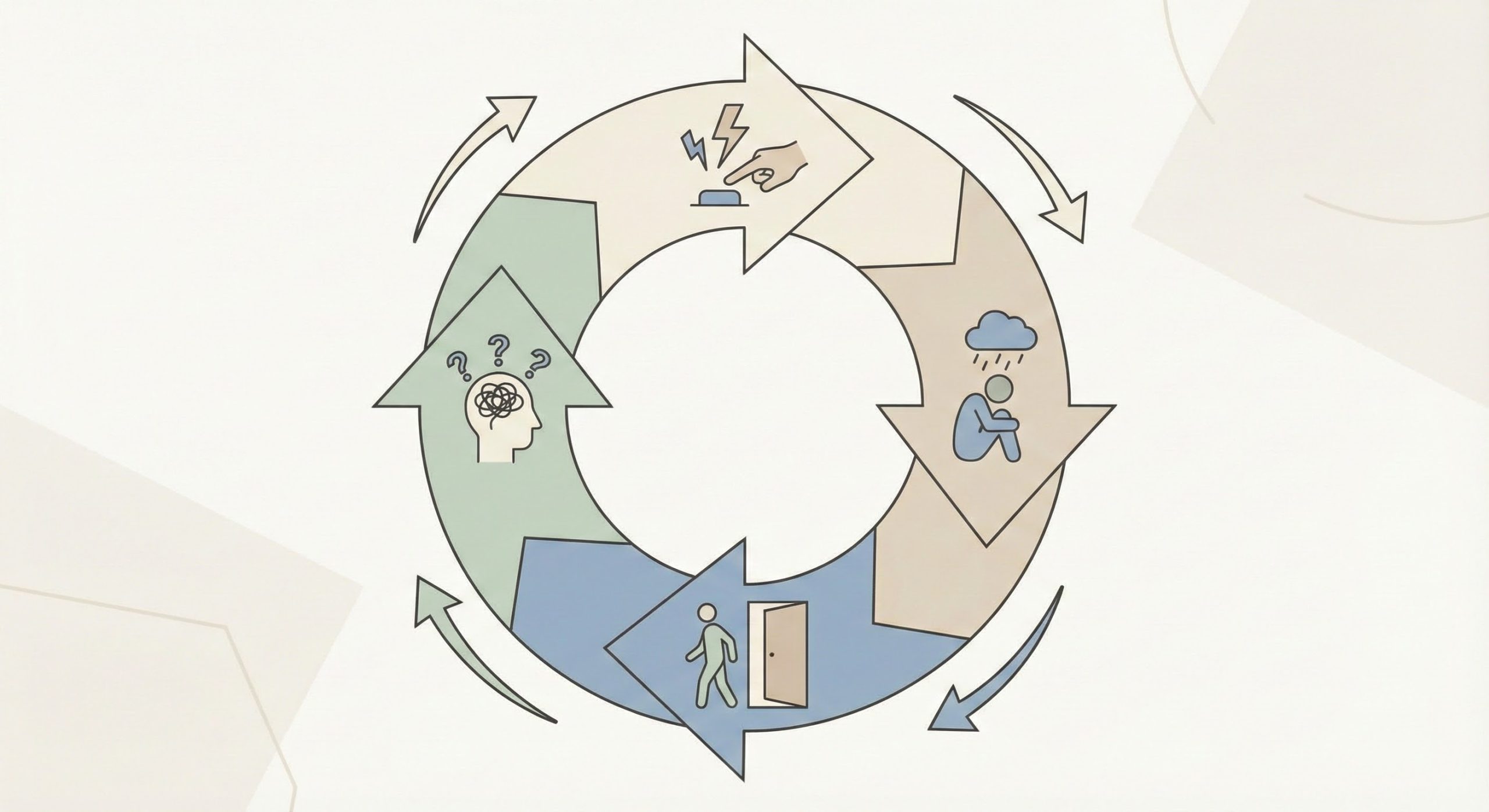
The Shame–Avoidance Loop
Money shame follows a predictable cycle:
Trigger → bill, alert, conversation
Emotion → shame, fear, self-blame
Response → avoidance (“I’ll deal with it later”)
Result → more confusion, reinforcing shame
This isn’t laziness. It’s a stress response.

Why Avoidance Feels Safer (Short-Term)
Avoidance provides immediate relief by:
-
lowering emotional intensity
-
protecting self-worth
-
delaying discomfort
Your nervous system interprets avoidance as safety—even when it creates long-term stress.

How Money Shame Undermines Financial Wellness
Unchecked money shame can quietly lead to:
-
missed opportunities and late fees
-
underuse of protective tools (savings, insurance)
-
delayed planning and decision paralysis
-
chronic background anxiety
Financial wellness requires emotional safety, not just information.

Reframing the Problem: From Shame to Safety

Instead of asking:
“What’s wrong with me?”
Try:
“When did money start feeling unsafe to face?”
This shift replaces judgment with curiosity—and opens the door to change.
Gentle Ways to Break the Cycle
1️⃣ Separate Self-Worth From Skill
Money management is a learned system, not a measure of intelligence or character.
Confusion is not a verdict—it’s feedback.
2️⃣ Replace “Fixing” With Familiarizing
You don’t need to solve anything yet.
Start with neutral exposure:
-
open the account
-
scan balances
-
close the tab
Familiarity rebuilds safety.
3️⃣ Shrink the Exposure Window
Limit interaction to:
-
5–10 minutes
-
one screen
-
no decisions
Small doses retrain the nervous system without overwhelm.
4️⃣ Use Neutral Language
Replace:
-
“I messed this up”
with -
“I’m noticing what’s here.”
Language shapes emotional response more than logic.
When Shame Blocks Help
Money shame often prevents people from:
-
asking questions
-
using tools or advisors
-
admitting confusion
Needing clarity is not failure—it’s human.
Why Healing Shame Improves Money Outcomes
Reducing money shame:
-
lowers avoidance
-
increases follow-through
-
supports protective choices (saving, insurance)
-
reduces chronic stress
This is foundational Financial Wellness work, not optional self-improvement.
Gentle Reflection
-
What emotion shows up first when you think about money?
-
Whose voice does that judgment sound like?
-
What would change if money felt emotionally neutral?

Frequently Asked Questions
Is money shame common among high achievers?
Yes. High standards and self-identity often intensify shame.
Can money shame exist without debt or crisis?
Absolutely. Shame is about perception, not circumstances.
Does addressing shame actually improve finances?
Yes. Reduced avoidance leads to clearer, more consistent decisions over time.
Final Thought
You don’t avoid money because you’re incapable.
You avoid it because your nervous system learned that money wasn’t safe to face.
Financial wellness begins not with discipline—but with compassion.
When shame softens, clarity becomes possible.
Continue the Financial Wellness Series
-
Money Avoidance – why ignoring finances feels safer
-
The 15-Minute Money Date – rebuilding trust through ritual
-
Financial Wellness – The Calm Money Guide – the full framework
This article is for educational purposes only and does not constitute financial or psychological advice.
Sources
American Psychological Association. Shame, avoidance, and stress.
National Institute of Mental Health. Anxiety-related avoidance behaviors.
When to Seek Help
Persistent shame or avoidance around money may benefit from therapeutic support, especially if it impacts emotional well-being or decision-making.

Michael Tran
Financial Wellness Editor at LifeWellToday
About Michael Tran
Michael Tran is a Financial Wellness Editor at LifeWellToday, where he focuses on the intersection of money, mental well-being, and everyday life.
His work helps readers understand financial stress not as a personal failure, but as a natural response to modern pressures—rising living costs, healthcare expenses, workplace demands, and economic uncertainty. Michael writes with a calm, human-centered approach, translating complex financial and insurance topics into practical, emotionally grounded guidance.
Rather than promoting hustle culture or extreme financial optimization, Michael emphasizes clarity, emotional safety, and sustainable habits. His goal is to help readers feel more confident and less overwhelmed when making everyday financial decisions.
Areas of Focus
- Money anxiety and emotional stress around finances
- Insurance literacy (health, life, and workplace coverage)
- Financial boundaries at work and burnout-related money stress
- Emergency funds, medical bills, and financial avoidance
- Behavioral finance and habit-based money systems
All content is written to align with responsible YMYL standards, prioritizing education, balance, and reader well-being.
Editorial Approach & Standards
At LifeWellToday, Michael collaborates closely with the editorial team to ensure that all Financial Wellness content:
- Is educational and informational—not personalized financial advice
- Reflects evidence-based insights from reputable sources
- Avoids fear-based or urgency-driven messaging
- Aligns with Google’s E-E-A-T (Experience, Expertise, Authoritativeness, Trustworthiness) guidelines
When appropriate, articles include references to trusted public sources and guidance on when readers should seek professional financial, medical, or mental health support.
Experience & Background
Michael has experience in editorial research and long-form content development within the lifestyle and wellness space. His background includes analyzing behavioral patterns, simplifying complex topics, and building content systems designed for clarity and reader trust.
He believes financial wellness is not about perfection or wealth—but about creating a sense of safety, agency, and self-respect around money.
Disclaimer
Michael Tran is not a licensed financial advisor, medical professional, or legal expert. All content published on LifeWellToday is intended for educational and informational purposes only and should not be considered professional advice.
Readers facing serious financial, medical, or mental health concerns are encouraged to consult qualified professionals.
Contact & Editorial Inquiries
For editorial questions or content-related inquiries, please contact:
? michael@lifewelltoday.com
2 Comments
Pingback: Credit Score Anxiety: Why a Number Feels So Personal
Pingback: Rest Is Not a Reward: Why Overworking Feels Safer Than Rest